

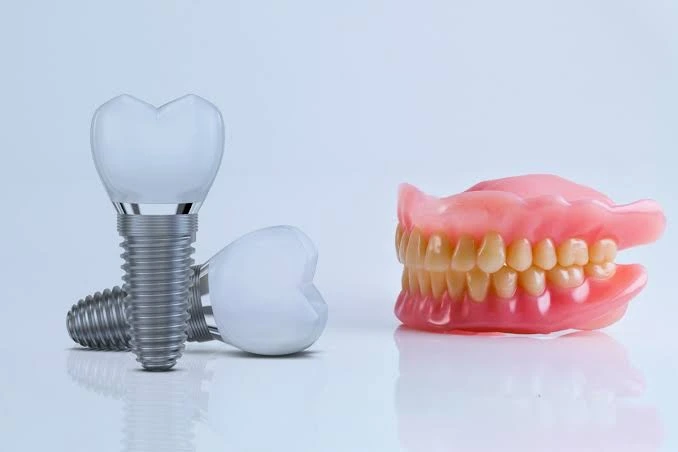

Tooth loss can stem from decay, gum disease, injury, or aging, and two restorative solutions for this issue are dental implants and dentures. Dental implants replace missing teeth by anchoring artificial tooth roots into the jawbone, while dentures are removable appliances that sit on the gums. Both restore function and appearance, but they work differently and suit different needs. Here is more information about implants and dentures:
Exploring Missing Teeth
Tooth loss affects more than just your smile, and the consequences may extend deeper than the surface. The jawbone depends on the stimulation of tooth roots to maintain its density. When teeth are missing, the bone gradually deteriorates in a process called resorption.
When a tooth is missing for a significant amount of time, neighboring teeth may shift toward the gap. This shifting can misalign your bite, and it sometimes creates new dental problems. Speaking and chewing may also become difficult with missing teeth. Dental implants and dentures can help resolve the issues that missing teeth cause.
Understanding Dental Implants
Dental implants are titanium posts that a surgeon places directly into the jawbone. A dental implant is made up of three parts: post, abutment connector, and crown. The post and abutment are part of any implant procedure, even ones that anchor a dental bridge or denture; the dentist adds the crown when the implant replaces the whole tooth structure.
The placement process begins with a consultation and imaging to assess your overall oral health and jawbone density. Surgery is performed to insert the post, and a healing period of three to nine months follows to allow the implant to fully fuse with the bone. Once the jawbone is fully healed, the abutment and crown are attached.
Maintenance is straightforward because implants need very similar care to natural teeth. Brushing, flossing, and routine dental checkups keep them in good condition. There are no dietary restrictions with dental implants, and your hygiene routine will be largely the same as your natural teeth’s needs.
Introducing Dentures
Dentures are removable prosthetics that replace missing teeth, and they come in several forms:
- Partial dentures: fill gaps when some natural teeth remain
- Full dentures: replace an entire arch of teeth
- Implant-retained dentures: attach to implants for added stability
When you get dentures, the dentist takes impressions of your mouth. This step helps the dentist fit the appliance to your unique anatomy. Multiple fittings may be needed before the final set is ready. Adjustments may be needed in the first few weeks, and the mouth adapts to the new appliance over time.
Removable dentures require daily cleaning with a soft brush and denture solution. Adhesives can help secure them, and regular dental visits allow the fit to be monitored. Dentures that are secured with implants are not removable at home. Eating and speaking may require an adjustment period.
Choosing a Restoration
Before you choose a restoration, a conversation with your dentist will help clarify which option aligns with your oral health and lifestyle. Here are some questions that may help you discuss this decision with your provider:
- Am I a candidate for dental implants based on my bone density and health history?
- How long will the process take for each option?
- What are the long-term outcomes for implants versus dentures in patients with my profile?
- Will my existing teeth or bone structure affect which option performs better?
- What does maintenance look like for each option in the long-term?
Your dentist can evaluate your specific anatomy and medical history to recommend a suitable path forward. A second opinion from an oral surgeon or prosthodontist can also provide valuable perspective.
Learn More About Restorative Dentistry
Dental implants are a permanent solution for missing teeth; dentures provide a potentially removable option. Both restore the ability to eat and speak. If you want to learn more about dental implants and dentures, consult a dental professional near you.
