

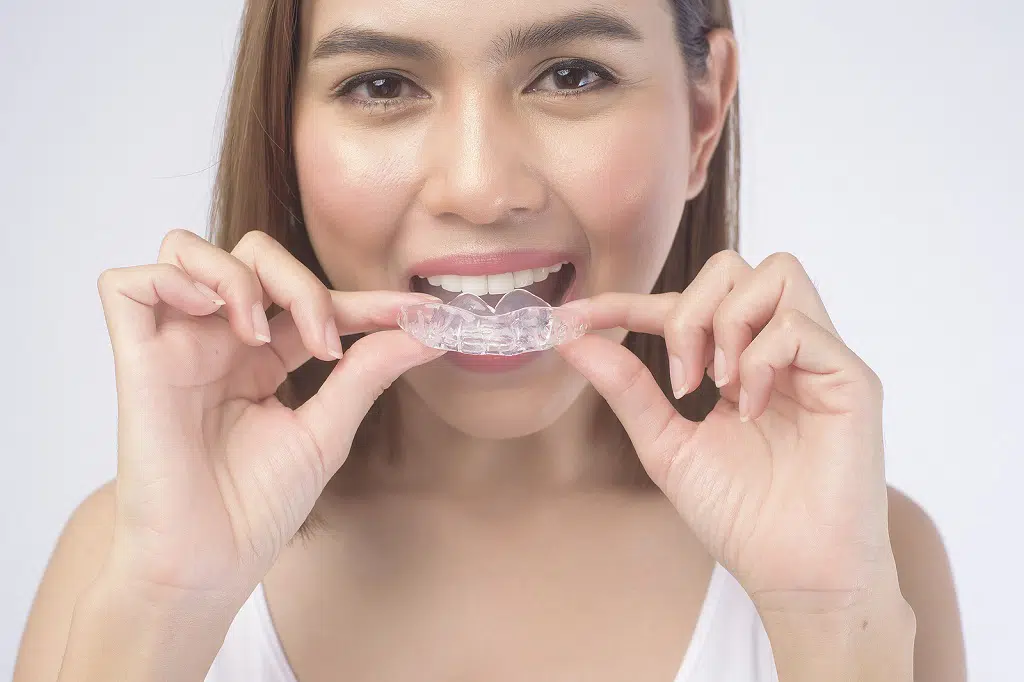

Invisalign aligners are clear plastic trays that fit over the teeth to move them into position across a span of months, addressing crowding or misalignment. The trays are removable, and they stay in the mouth for most hours of each day. Because the plastic rests against the teeth and gums for long stretches, a regular cleaning routine keeps the surface clear of buildup. Food particles and saliva collect on the trays during daily wear, so a steady habit limits the residue that forms. These practices increase the lifespan of the alignment trays.
Cleaning Materials
Invisalign cleaning crystals are a product made for soaking the trays in a prepared solution. A packet of crystals is emptied into a container of water, and the trays sit in the mixture for about fifteen minutes. The dissolved crystals release agents that loosen stubborn buildup on the plastic, and a final cool rinse clears the residue afterward. Many dental offices that offer Invisalign also offer these cleaning materials as well.
Cold Water Rinses
Cold water is often the first step in a basic cleaning routine. Aligners should be rinsed under cool running water each time they leave the mouth, and this lifts away loose saliva before it settles. Since the mouth is acidic, cleaning the trays regularly keeps them working for longer.
Water temperature influences the safety of this step. Warm or boiling water can warp the thin plastic, so cool water should be the standard choice for daily rinsing. The trays hold their shape when temperatures stay low, and a cool rinse clears debris without altering the fit. A quick rinse after removal stops dried particles from sticking to the surface.
Cold rinses do not remove every layer of buildup, but it reduces the amount that gathers over time. Each rinse takes only a few seconds, and the trays should return to the mouth or a storage case afterward. Frequent rinsing throughout the day keeps the plastic clearer between brushing sessions.
Gentle Brushing
A soft-bristled toothbrush clears residue from the aligner surface during a routine. Brushing should be done gently because firm scrubbing can scratch the plastic, and scratches create cloudy patches that hold bacteria. The brush should go across the inside and outside of each tray with light pressure. Brushing can be done with water, since cleaning materials can also scratch the plastic.
Plain water can rinse away any loosened material once the brushing finishes, and this final pass clears the surface. Dentists may recommend that users do not use toothpaste on the trays, since gritty formulas can dull the clear plastic. A separate brush may be kept apart from the daily toothbrush to limit the transfer of paste residue and bacteria onto the trays.
Learn More About Invisalign
Invisalign is a great option for individuals who would prefer a more subtle method for teeth alignment. By cleaning the trays regularly, users can reduce bacteria and residue buildup. Regular cleaning methods are gentle enough to protect the plastic, but they’re thorough enough to produce good results. To learn if Invisalign is right for you, contact a dental provider for a consultation.
