

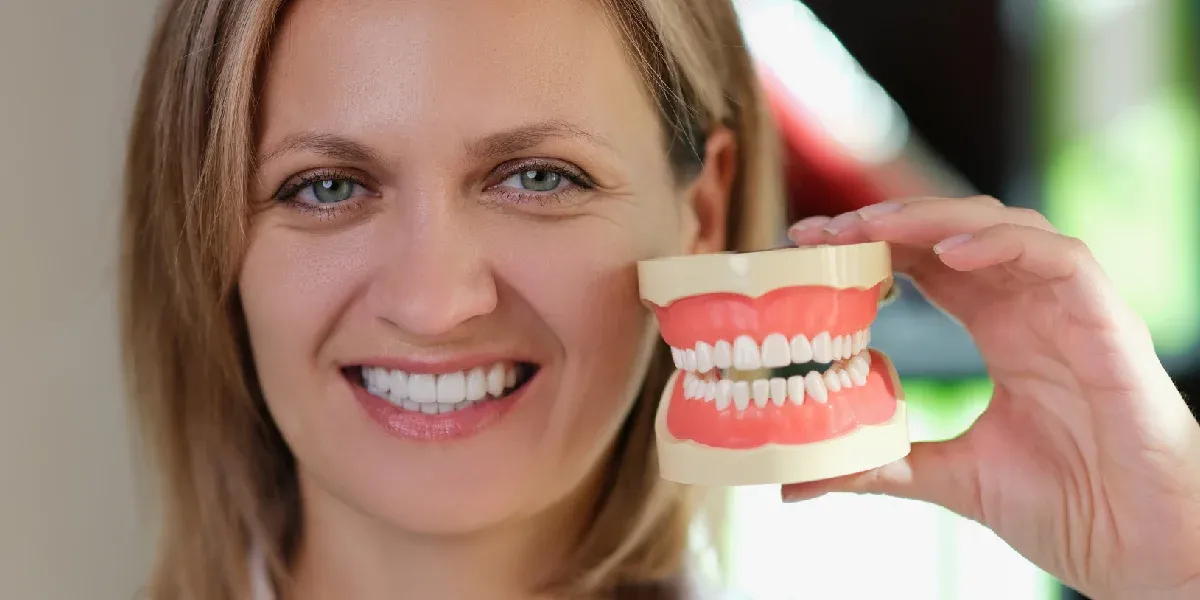

Missing teeth affect daily activities, and dental prosthetics offer a clinical solution. Dentures are removable replacements for missing teeth that restore both appearance and basic oral functions. Dentists customize these dental devices for specific anatomical needs. Here is more information on dentures, how they work, what issues they address, what the process involves, and their functional impact:
What Are Dentures?
Dentures are custom-made prosthetics designed to replace missing teeth. They consist of artificial teeth attached to a pink acrylic base that mimics the appearance of natural gums. Dentists classify them into various categories based on the extent of tooth loss. Complete dentures replace an entire arch of teeth, and partial dentures fill the gaps left by a few missing teeth.
How Do They Work?
Complete dentures rely on suction to stay in place, and the saliva in the mouth helps create this necessary seal. The upper denture covers the roof of the mouth to maximize surface area. The lower denture is shaped like a horseshoe to leave room for the tongue. This specific design accommodates standard speech patterns by allowing the tongue to move freely.
Partial dentures work alongside the remaining natural teeth. The attached clasps grip the surrounding teeth securely, preventing the prosthetic from shifting during use. The framework distributes the bite force across the entire jaw. Patients can remove both types of devices for cleaning, and they soak them overnight to maintain their physical shape.
What Issues Do They Address?
Missing teeth create distinct anatomical challenges for patients. Gaps in the dental arch alter the distribution of bite forces, leading to premature wear on the remaining teeth. Dentures redistribute these forces evenly across the mouth. They prevent neighboring teeth from shifting out of position, and they stabilize the overall bite.
Speech articulation depends on the presence of teeth, as certain phonetic sounds require the tongue to strike the dental arch. Missing teeth disrupt this acoustic process. Dental prosthetics restore the necessary surfaces for proper pronunciation. They allow patients to form words correctly, facilitating clear communication.
What Does the Process Involve?
The fabrication of dental prosthetics requires multiple clinical appointments. A dentist first examines the oral cavity and takes preliminary impressions of the gums, which they then send to a laboratory. The final appointment involves the delivery of the completed prosthesis. The dentist places the device in the mouth, and patients may receive instructions on proper daily care.
What Is Their Functional Impact?
A primary functional benefit centers on mastication. Patients regain the ability to process solid foods, potentially improving overall nutritional intake. The artificial teeth break down food particles efficiently, and the digestive system benefits from this mechanical preparation. This process enables the body to absorb nutrients more effectively.
Adaptation to the new prosthetics requires a specific adjustment period. The cheek muscles learn to hold the device in place, and saliva production may temporarily increase. Patients may start with softer foods to practice chewing. They gradually introduce more complex textures as muscle control improves, eventually returning to a standard diet.
Proper maintenance sustains these functional benefits over time. Daily brushing removes plaque from the acrylic surfaces, and overnight soaking prevents the material from drying out. Regular clinical evaluations monitor the device’s fit. Dentists perform necessary reline procedures to accommodate natural changes in bone structure, which keeps the prosthesis functioning correctly.
Learn More From a Dentist
Dental prosthetics offer a structured clinical solution for tooth loss. They restore standard oral mechanics, and they facilitate basic daily activities like eating and speaking. Schedule a consultation with a local dental provider to discuss these restorative devices.
