

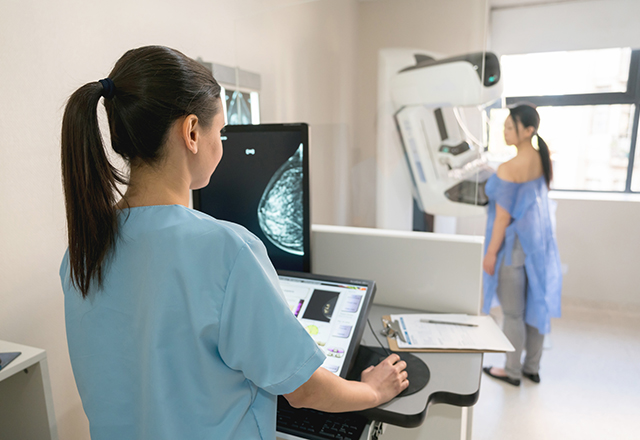

A mammogram is a routine imaging exam that uses low-dose X-rays to produce detailed images of breast tissue. It helps detect issues such as breast cancer. The appointment follows a structured process, and understanding each stage can make preparation and participation more straightforward. Here’s information about what to expect from a mammogram appointment:
Preparing for Your Appointment
A small amount of planning can make the scheduling and preparation process more straightforward. Book your mammogram at a time that fits your routine, confirm whether a referral is required, and ask in advance about any paperwork that needs to be completed before the appointment. These steps help make sure the visit proceeds without unnecessary delays.
On the day of the exam, avoid using deodorant, antiperspirant, powder, or lotion on the chest and underarm areas. These products sometimes contain particles that appear on imaging and interfere with the interpretation of results. They can be reapplied after the appointment, once the scan is complete. Wear a two-piece outfit so that only the top needs to be removed, and bring a list of prior imaging locations if available. This information can help the radiology team compare earlier studies and coordinate access to previous records when needed.
Completing the Imaging Steps
When you arrive, a staff member checks you in, confirms your personal and appointment details, and directs you to a changing area. You change into a gown and then meet the technologist who will perform the exam. The technologist positions one breast at a time on a flat imaging platform, and a compression plate gently presses down to spread the tissue evenly.
This compression helps create clearer images while allowing the exam to use a lower radiation dose. You remain still during each image capture, and the technologist may ask you to hold your breath briefly to reduce motion. Some exams include two standard views of each breast: one from top to bottom and one from side to side.
Screening mammograms generally require about 15 to 20 minutes to complete. Additional images may be taken if further detail is needed, which sometimes requires extra time. A standard exam places no restrictions on your day, so you’re able to return to work or errands promptly.
Receiving Your Test Results
Facilities typically deliver results within a few days to a couple of weeks. You may receive them through a patient portal, by letter, or by phone from your provider, so ask the staff how and when you should expect to hear back. Facilities sometimes request additional imaging after the initial appointment, depending on the findings from the first set of images. This follow-up imaging can be part of the standard process and allows the radiologist to obtain a more detailed view of a specific area. It does not always indicate a concern, and it serves to improve the clarity and completeness of the evaluation.
Schedule Your Mammogram
Mammograms are key for detecting early signs of breast cancer. Scheduling regular screenings based on your age and risk factors helps make sure any changes are identified early; this is when treatment may be most effective. Talk to your healthcare provider today to find out when you should schedule your next mammogram.
